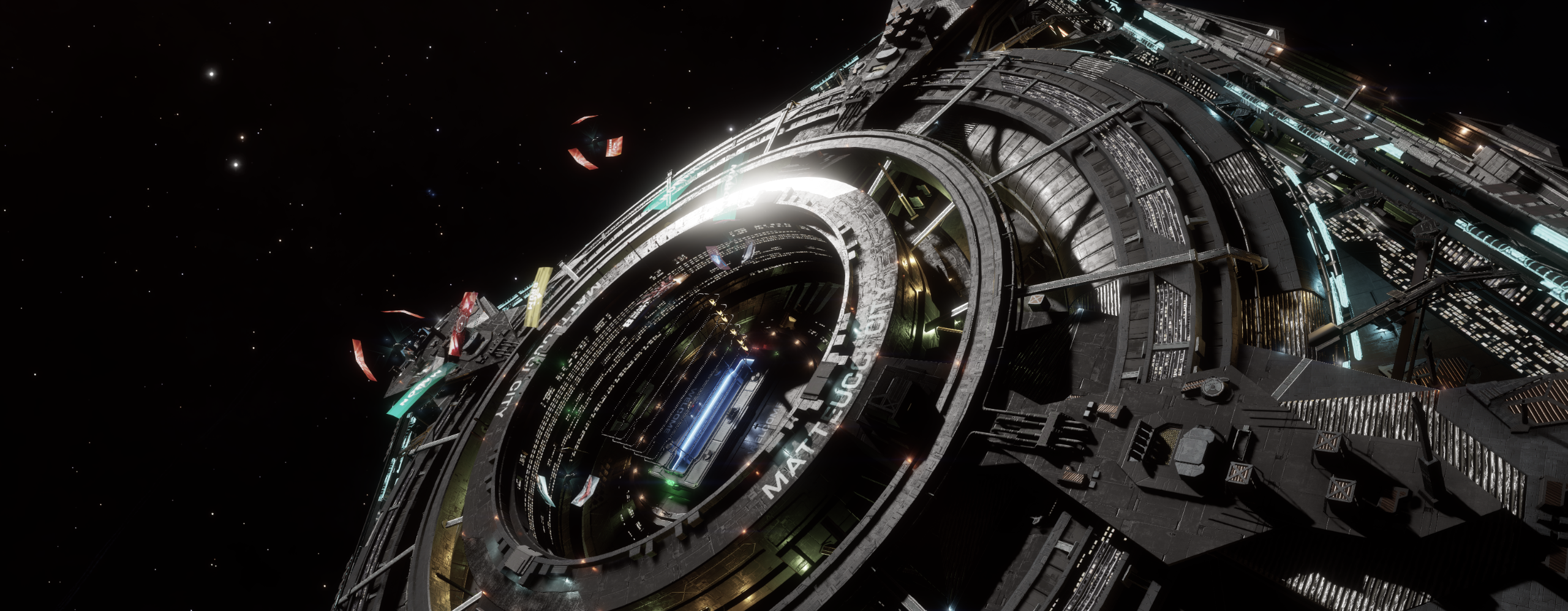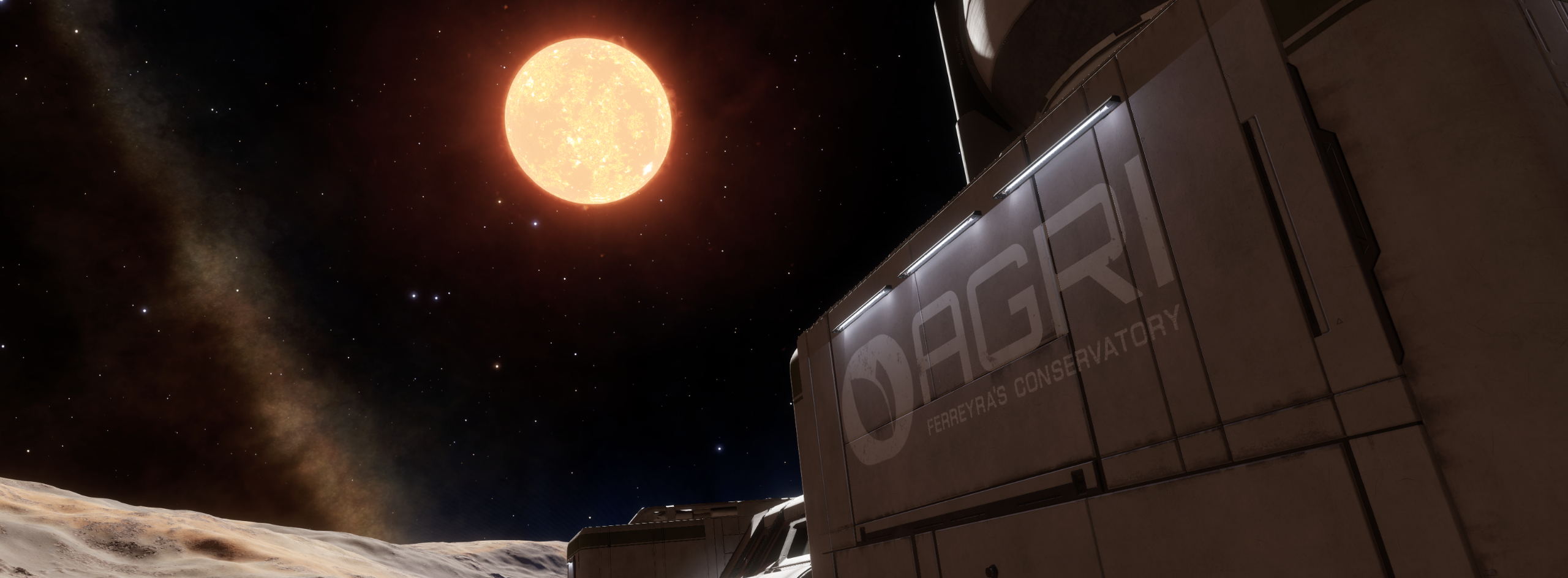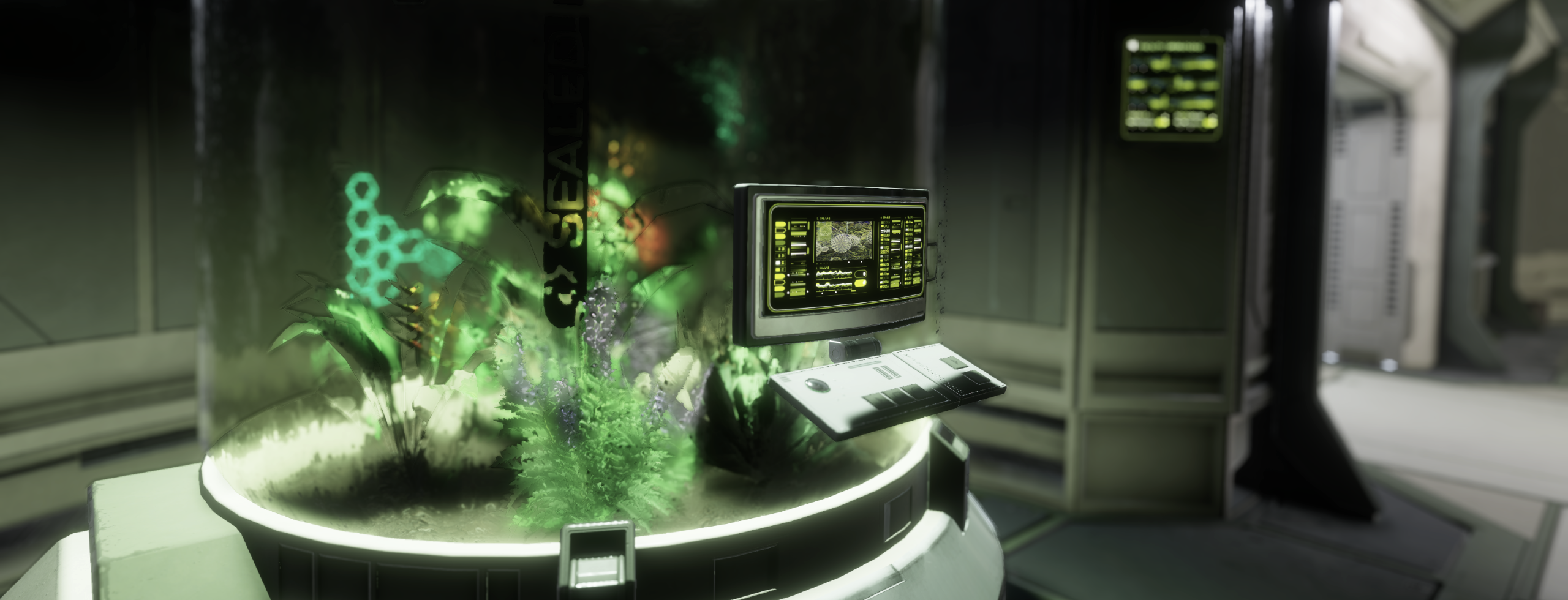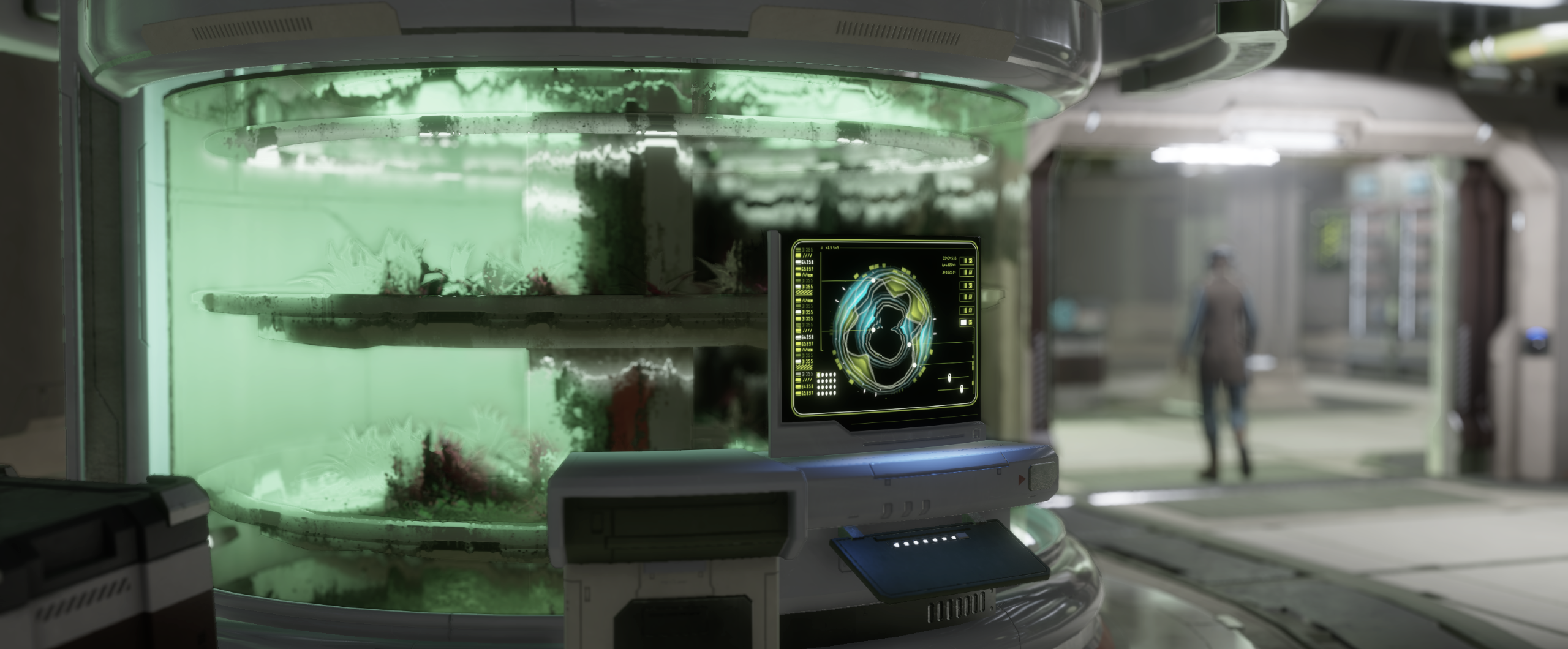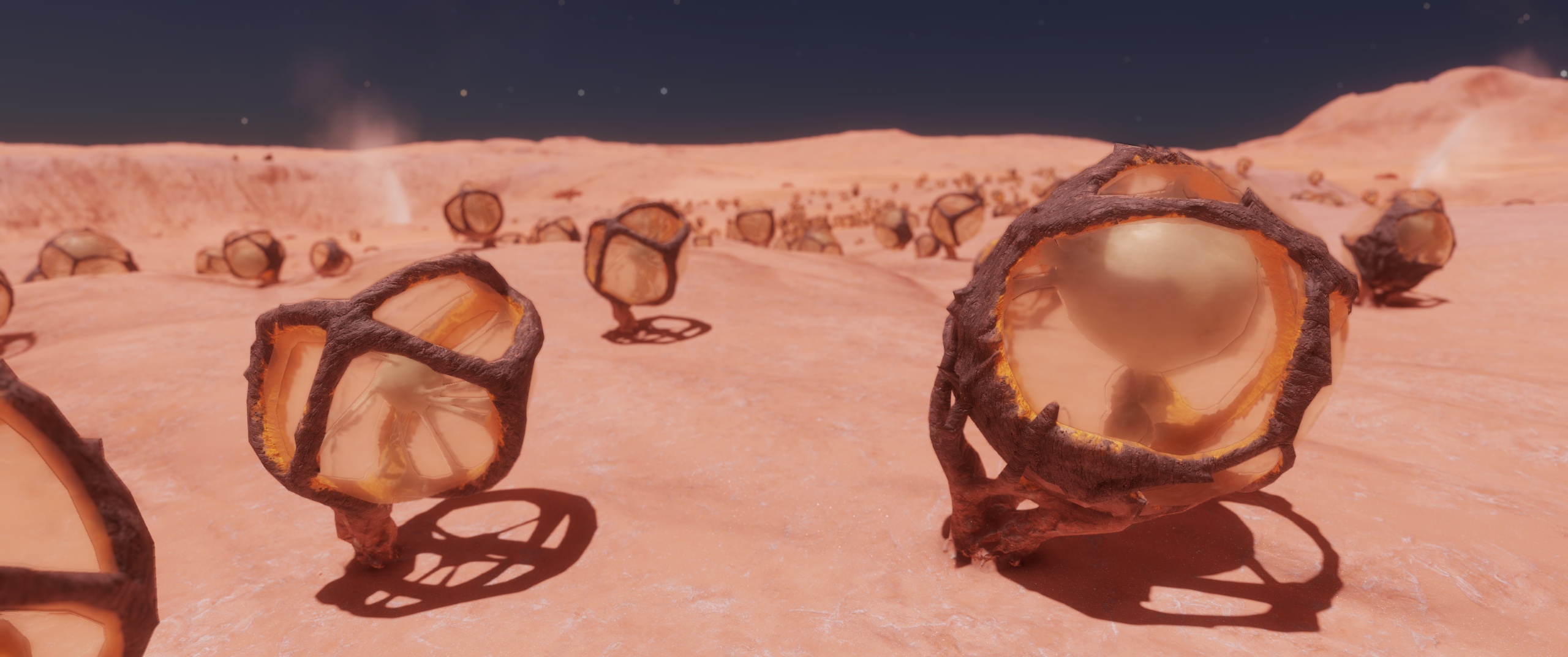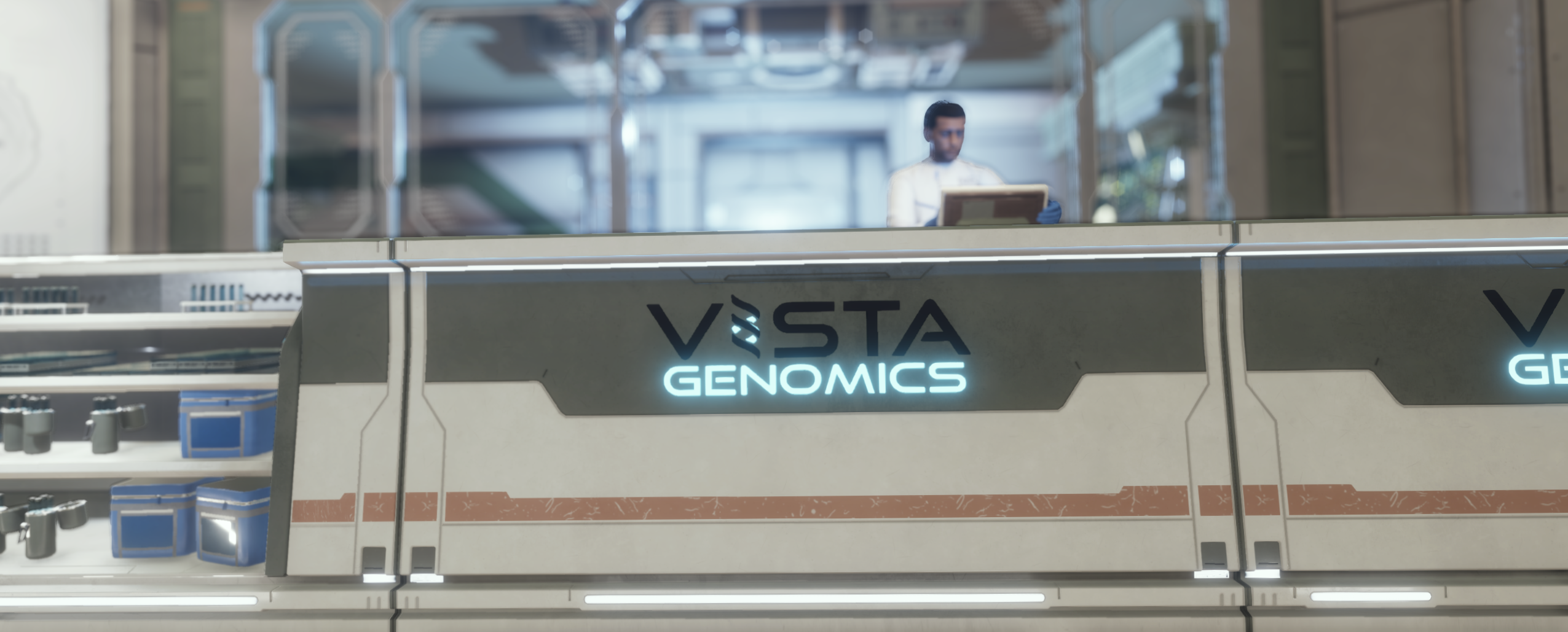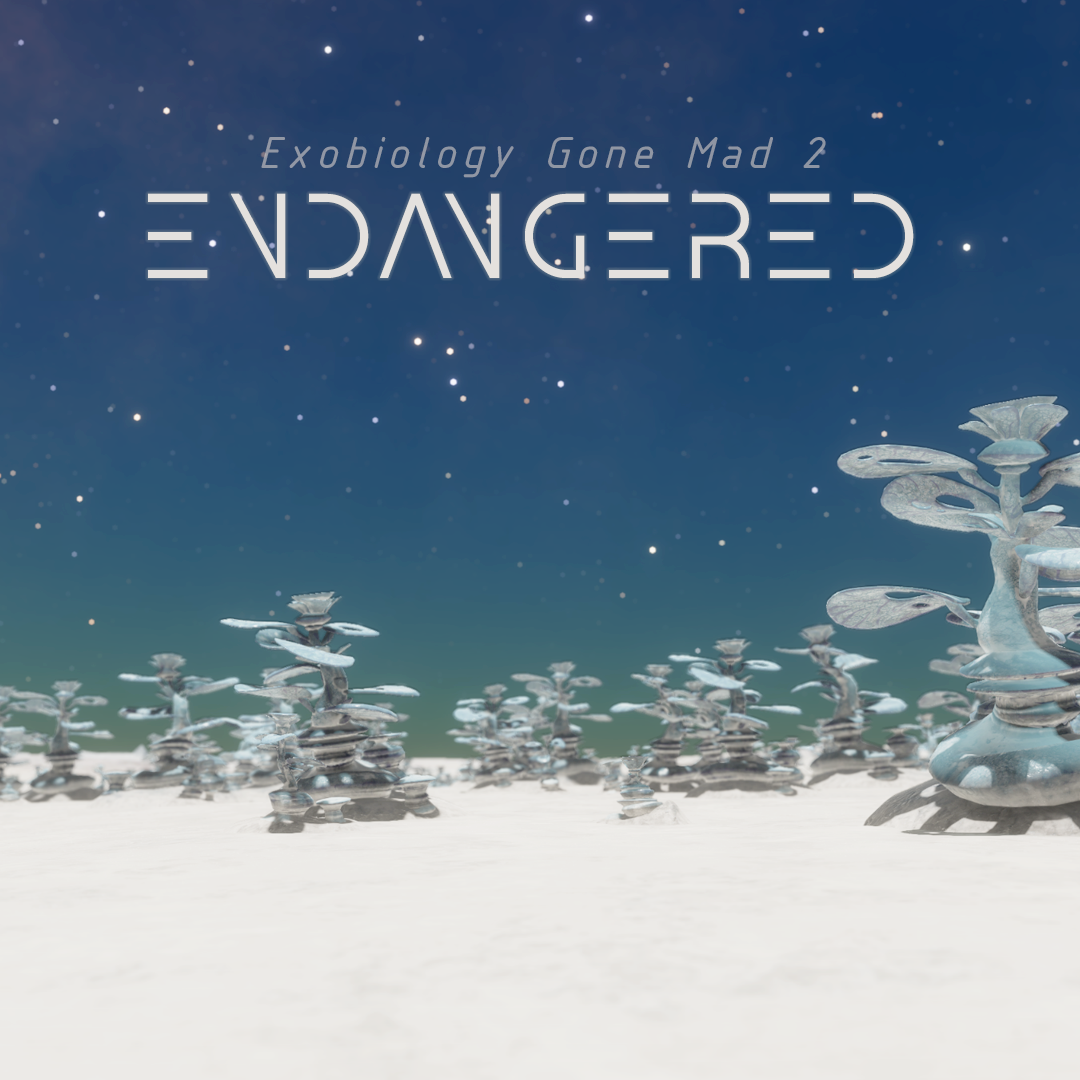


Cover
Adventure summary:
For several years, probes from the AIS — Alliance Institute of Science — have been conducting biological surveys in multiple systems. The latest data reveal a worrying anomaly: a species once considered common is gradually disappearing from field observations, with no clear explanation…

The recap

Ship:

Exploration

Vaisseau

Scarab or Scorpion

VRS

Surface scanner

Surface Scanner

Suit:

Artemis

Combinaison

Difficulty: Competent

Duration

2h

Max distance

145 LY


Endangered


Somewhere in the void of space - 23h32


Busy salvaging scrap metal from some wreck in midair, you watch, coffee cup in hand, as your drones buzz around in all directions, like a perfectly choreographed mechanical ballet. A grueling day's work is coming to an end, and you slowly start thinking about heading home with a few tons of salvaged metal.


Suddenly, a message appears on your device, pulling you out of your thoughts. An old acquaintance seems to want to get back in touch: Hana Tanaka, director of the Institute of Exobiology at the AIS (Alliance Institute of Science).


Commander,

I hope you have been well since we last met. If your schedule allows, I would like to request your presence at the AIS. I am facing a somewhat unusual situation and your help would be greatly appreciated.


My confidence in your judgment naturally leads me to turn to you first. I hope you will accept this request. I will be waiting for you at Moriarty's Progress, planetary port on Doris 5, but you already know that.


With all due respect,
Hana Tanaka - Director of the Institute of Exobiology


How could anyone refuse such an invitation? Head over to Moriarty’s Progress.


A worrying finding


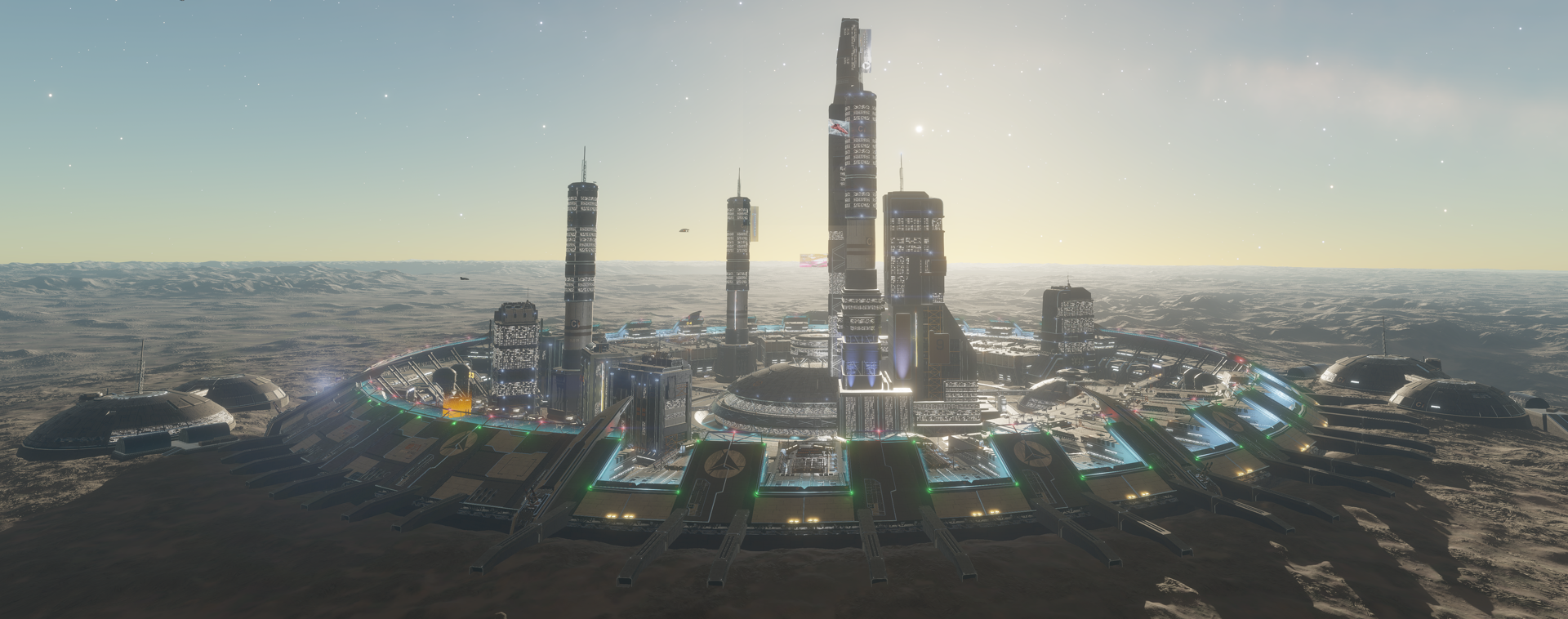
You arrive at Moriarty's Progress, where Hana Tanaka quickly greets you. You have worked together several times before, and your exchanges are almost familiar.


She explains that, for several years, AIS probes have been collecting biological data in several systems. However, the latest data has revealed a worrying anomaly: a species once considered common is gradually disappearing from field observations, with no clear explanation yet found.


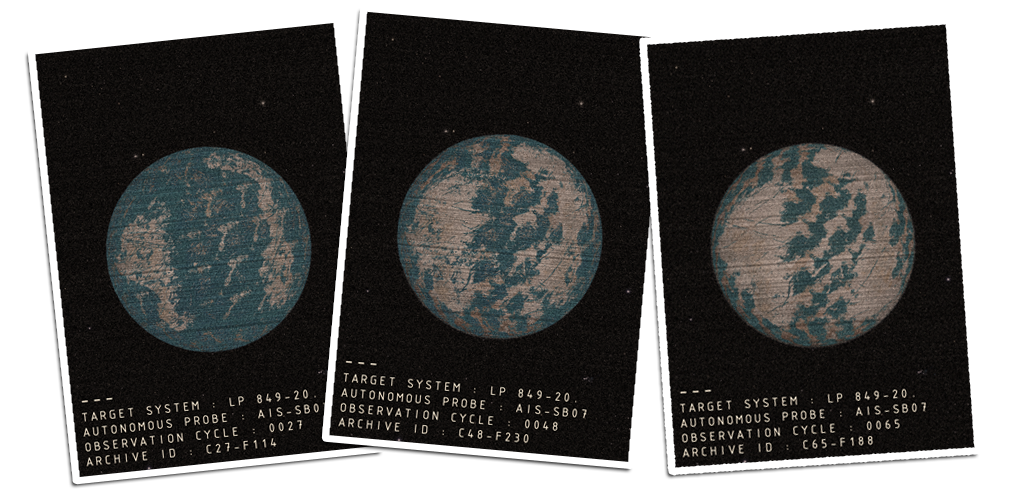
Hana Tanaka then shows you three images recorded by the AIS-SB07 probe. She asks you to go to the site to identify the planet in question and, above all, to determine what species it is.


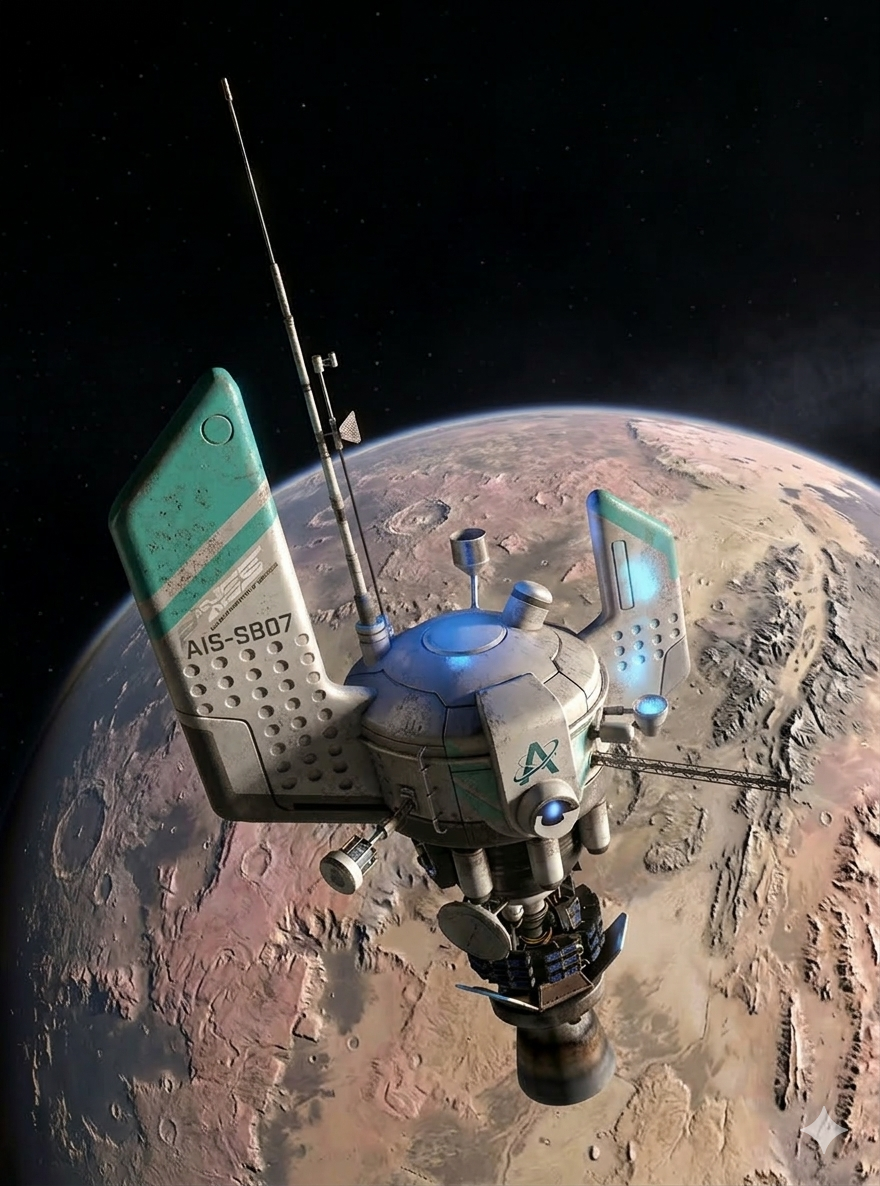
The AIS-SB07 (Survey Buoy 07) is a first-generation autonomous probe deployed by the Alliance Institute of Science nearly twenty years ago.

Designed to provide long-term biological readings, it performs orbital observations at regular intervals and archives comparative images intended to track the evolution of planetary ecosystems.


Despite its now outdated technology, the SB07 continues to transmit reliable data thanks to its redundant systems and simplified analysis program. Its exceptional longevity makes it one of the oldest scientific instruments still in operation within the AIS exobiological monitoring network.


Evolution of an endangered species...


Before leaving, Hana Tanaka hands you a DataPad.


— I am giving you an AIS field tablet. It should be useful for your research. It has been specially configured for your mission.


She pauses briefly before adding:

— It's unlocked. Just log in with the username Guest. And don't forget your genetic sampler!


It's time to head to the system where the probe observed the anomaly...: LP 849-20


Once the step is completed, proceed to the next step 


LP 849-20


No sooner have you emerged from the last jump in the system than you’re already sweating… With all these celestial bodies, you’re going to have to fire up the FSS Scanner.


You set your coffee mug down on the console and immediately begin your research to find the type and family of the endangered species.


Look for the planet that has exobiological signals. 

Then look for the exobiological signal that corresponds to the most recent image.


Enter the endangered species as the password. 

(only species type and family)


Password:

Once the step is completed, proceed to the next step 


Fonticulua Upupam


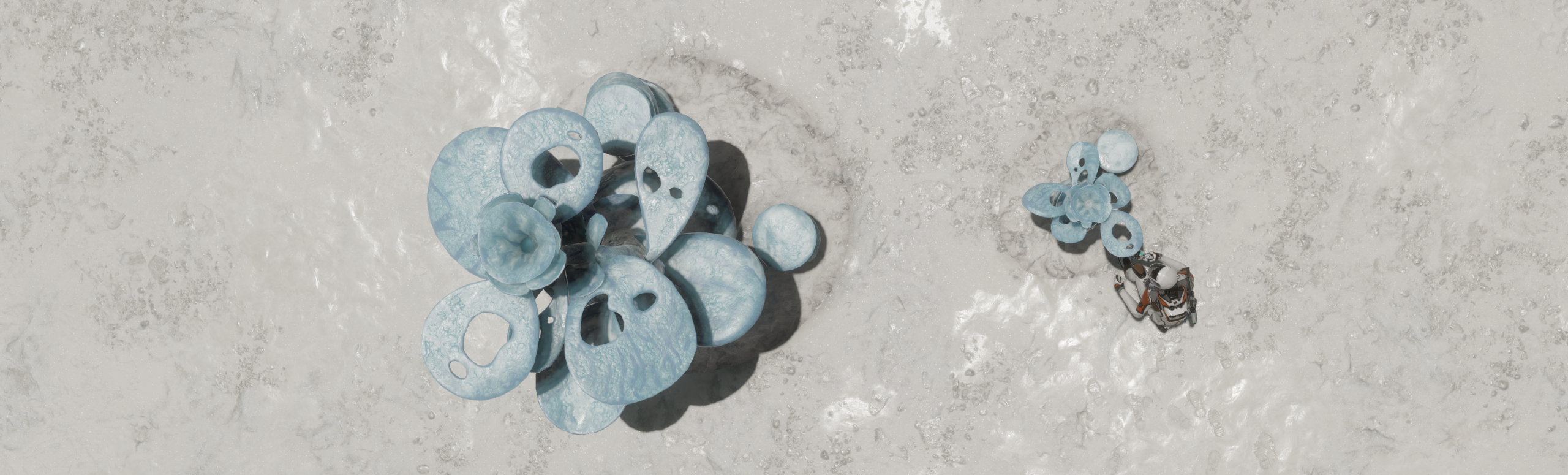
You approach the species with caution and respect. Before you, the organism appears fragile and vulnerable. A question crosses your mind: what is happening on this planet that is causing this life form to slowly die out?


You continue your work methodically and complete the scan of the organism until you reach 100% analysis. The sensors record the final biological parameters while your sampler already compiles the data collection.


Once the operation is complete, you return to your ship to contact Hana Tanaka. 


Once the step is completed, proceed to the next step 


Initial analyses


Great work, Commander! To save you unnecessary trips back and forth to Vista Genomics and wasting valuable time, I suggest we perform the analysis right here on site.


Import the data you have collected into the tablet using the Cell Observer tool. This module will allow you to observe the evolution of the organism's cells as they divide.


Once the analysis is complete, simply let me know the number of cell generations observed until their extinction.


This will give me an initial indication of the seriousness of the situation.


Following his instructions, you then extract the data from the genetic sampler and import it into the tablet.


I almost forgot, if you have any questions about how the modules work, simply enter their name into the AIS database on the tablet : AIS Archives


You will find not only user manuals, but also a wealth of additional information that may prove useful during your assignment (*).

(*) That's for sure ;)


Even after the cells disappear, the generation counter continues... So pay attention! When you feel the end coming, don't hesitate to press 'Pause' and manually advance the generations with 'Step'.

You may have to try several times… 


Enter the number of generations required for the cells to disappear completely (blank screen) as the password.


Password:

The situation is more serious than I feared... but it's not too late yet.


I will nevertheless ask you to bring the sample to the Vista Genomics agency in Matteucci City. Their facilities will allow these initial readings to be analyzed under better conditions.


Once you've done that, take a moment to relax at the bar. Take advantage of this opportunity to take a breather while I receive their comments.


Go to Matteucci City to drop off your samples at Vista Genomics.


Once the step is completed, proceed to the next step 


DNA manipulation


You've barely started your meal when your device flashes...


Analysis reveals that the cellular composition of the organism has been altered. Its structure is abnormally complex, a 16×16 pattern, far beyond what is usually observed in plant organisms (8x8). 


Everything points to a mutation or artificial alteration!


To understand the origin of this deviation, we must find the original DNA of the species. The only method is to compare this altered sample with that of a healthy organism belonging to the same family. This is our best chance of understanding what happened to this species.


Locate a planet harboring a healthy Fonticulua Upupam organism using the biological search module: AIS Probe Data.


Enter the color of the healthy organism found on site as the password.

Password:

Once the specimen has been scanned, extract the data from the genetic sampler to decompress it.


Now that you have the data from the altered organism and another healthy one, here is the procedure to follow to reconstruct the original DNA of the altered species:


1. You will first need to decompress the two DNA files (RLE files) using the dedicated module: DNA Decompression. You will then obtain a raw DNA structure for each of them.

2. Then cross the two DNA structures using the genetic analysis module: DNA Recombination. The original DNA will appear as a raw structure = the drawing you can see in the Cell Observer

3. Import it into the Cell Observer module to analyze its cellular evolution.


Once you have recovered the structure of the original DNA, please let me know the number of cells (POP, for population) in the 4000th generation (GEN)


This will be a reliable indicator for assessing the health of the body.


Password:

Once the step is completed, proceed to the next step 


Planetary manipulation


Very well. This indicates that the species is not naturally altered: its original genome is stable and consistent.


For its part, Vista Genomics conducted an in-depth analysis of the altered cells. The results confirm the presence of an unknown microorganism that inserts itself into the basic cellular structure. This intrusion disrupts the reproductive development of the organism. As a result, if the species can no longer reproduce, it gradually disappears.


If this microorganism is not of natural origin... where does it come from? Return to LP 849-20 ABC 1 c, we'll have to find clues there.


On LP 849-20 ABC 1 c, what are the planetary signals?


There is the altered plant organism that you have already scanned: what does the data retrieved from the genetic sampler contain? One line remains unreadable...

And there is also a planetary installation...


Don't forget the AIS database on the tablet...


Enter the full name of the scientific project related to this planet as the password.

Password:

Once the step is completed, proceed to the next step 


Pr. Kaito Ueda


When playing at being an apprentice terraformer, it's best to be absolutely certain of what you're doing. The information you've gathered suggests that something went seriously wrong back when Ueda's Chase was still a scientific facility... and now, an entire species is disappearing.


Professor Kaito Ueda seems to have abandoned his former experimental facility, as if he would rather forget about the site than face the consequences. He undoubtedly has some explaining to do. And the best way to get answers is still to confront him directly.


Since he also works for the AIS, you prefer to leave Hana Tanaka out of it for now. Head for the facility where the professor's laboratories are now located.


Enter the name of the installation as the password.

Password:

Once the step is completed, proceed to the next step 


Ferreyra's Conservatory


Upon arriving at Ferreyra’s Conservatory, you immediately try to contact Professor Kaito Ueda. After a few queries on the facility's internal network, the answer finally comes back: the professor is on an outside assignment and is not currently on site.


Unwilling to leave without an answer, you decide to find out what project he is working on and, ultimately, where he is. He must have left a trace in the installation data.


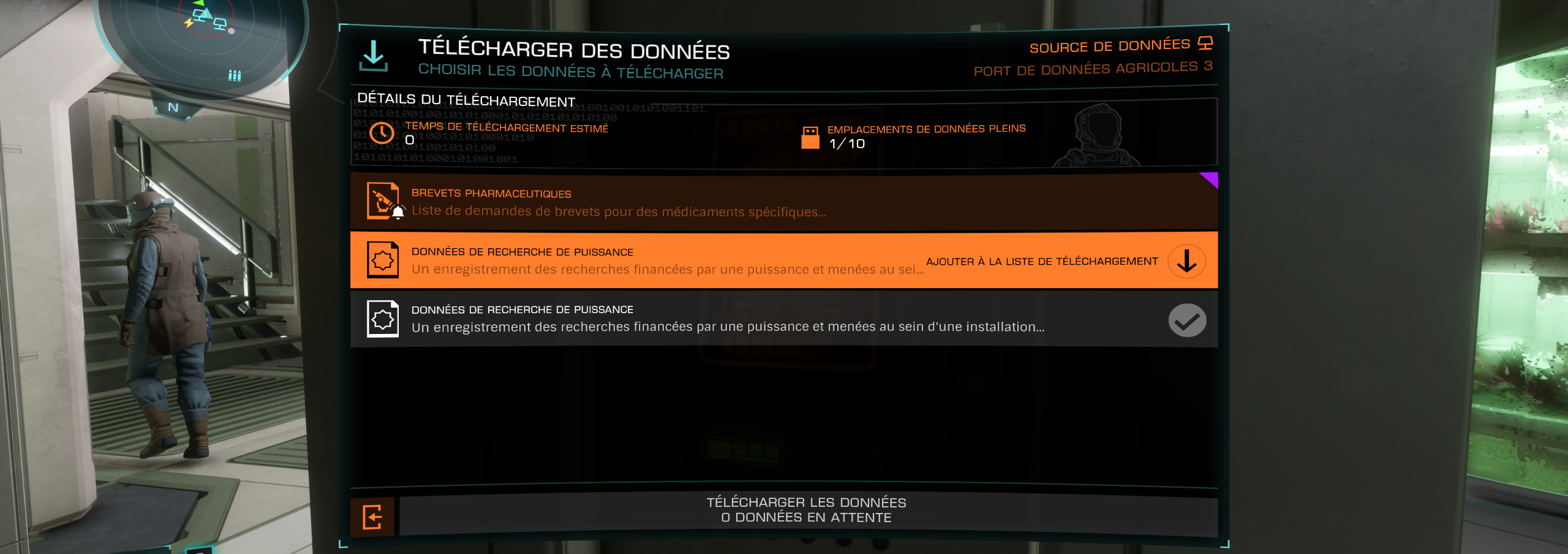
You then spot an accessible data port. After quickly glancing around to make sure no one is paying attention to your movements, you connect your interface and begin hacking into the terminal.


To proceed, download data that could indicate its location (download any data, but avoid data with the bell icon that could trigger the alarm).


Once the step is completed, proceed to the next step 


The works of Ueda


Bingo! You can find the complete list of his works here:


>> Project-BIO-TF1
Year: 3290
Description: Initial work on adapting cold-resistant plant organisms to stabilize nutrient-poor soils on other planets.
Status: Archived


>> Project-BIO-TF2
Année : -

Description: -
Status: Aborted


>> Project-BIO-TF3
Year: 3291
Description: Advanced biological terraforming program using synthetic microorganisms in rocky soil to accelerate the evolution of planetary ecosystems.
Status: Abandoned


>> Project-BIO-TF4
Year: 3293
Description: Experimentation on the symbiosis between soil microorganisms and local flora in order to improve the fertility of emerging biospheres.
Status: Archived


>> Project-BIO-TF4a
Year: 3295
Description: Development of bacterial colonies capable of fixing nitrogen in atmospheres poor in organic compounds.
Status: Completed


>> Project-BIO-TF4b
Year: 3297
Description: Controlled introduction of bioengineered mosses to stabilize the topsoil on a rocky world undergoing experimental terraforming.
Status: Archived


>> Project-BIO-TF4c
Year: 3300
Description: Research on photosynthetic organisms capable of surviving under a variable light spectrum.
Status: Completed


>> Project-BIO-TF5
Year: 3303
Description: Study of modular plant organisms capable of rapidly adapting to atmospheric variations.
Status: Suspended


>> Project-BIO-TF6
Year: 3307
Description: Creation of experimental micro-ecosystems designed to test biological resilience in unstable environments.
Status: Archived


>> Project-BIO-TF7
Year: 3309
Description: Analysis of a microbial strain capable of modifying the chemical composition of soil in order to accelerate plant colonization.
Status: Completed


>> Project-BIO-TF7a
Year: 3311
Description: Confidential.
Status: Active


Complete but too brief. Where could we look for more information about the project currently under study?


Once you have found the information, move on to the next step.


Once the step is completed, proceed to the next step 


Antidote


After this highly informative exchange, one thing becomes clear: you must now find the specimen that can serve as an "antidote." Without it, it will be impossible to correct the genetic alteration that threatens the species.


All that remains is to identify the key element of this clue... What is the name of this organism?
(only the type and family of the species)


Using the professor's clues, browse the catalog of exobiological flora in search of the specimen: Exobiological Flora - Deep Space Network


Password:

Once the step is completed, proceed to the next step 


Condiment recipes


Professor Ueda contacted me after your discussions with him. He explained the situation regarding LP 849-20 ABC 1 c and the solution he is considering. I trust him on this matter.


In certain extreme environments, some life forms develop biochemical mechanisms capable of neutralizing parasitic microorganisms. 


We are nearing the end of this investigation. If we can identify the species capable of producing this compound, we will not only be able to save the endangered species, but also likely preserve the entire local ecosystem. Without intervention, the infection will trigger a chain reaction and sterilize the entire planet.


Look for specimens of Recepta conditivus and bring them directly to Professor Ueda in Matteucci City. He will be waiting for you there.


And thank you again, Commander. I knew I could count on you!


Enter the password for the system you need to access according to the AIS data.

Password:

Find and scan the organism Recepta conditivus.


Once you have collected the data with your genetic sampler, meet Professor Ueda in Matteucci City in the LP 849-20 system.


Once the step is completed, proceed to the next step 


Restoring balance


In front of the Vista Genomics counter at the Matteucci City station at LP 849-20, you see Professor Ueda in conversation with a geneticist. You approach and greet him.


He turns to you with a slight smile.


I am pleased to finally meet you, Commander. Thanks to your efforts, we now have a chance to restore the biological balance of LP 849-20 ABC 1 c. 


This whole affair has been a harsh but valuable lesson in humility for me. You can return your samples to Vista Genomics. We will begin working on the antidote today.


Thanks again, Commander. Our paths may cross again... who knows what foolishness I'll get up to next?


To conclude this adventure, sell your latest exobiological data to Vista Genomics!


Thanks to Chelito for kindly introducing me to Hana Tanaka ;D


You can automatically finish this adventure by logging in to the site with your Frontier account.


You can also share your snapshots on discord in the channel #trophées !


Podium

CMDR …

14/03/1337

CMDR …

14/03/1337

CMDR …

14/03/1337


And…

The following CMDRs have also completed this adventure: